
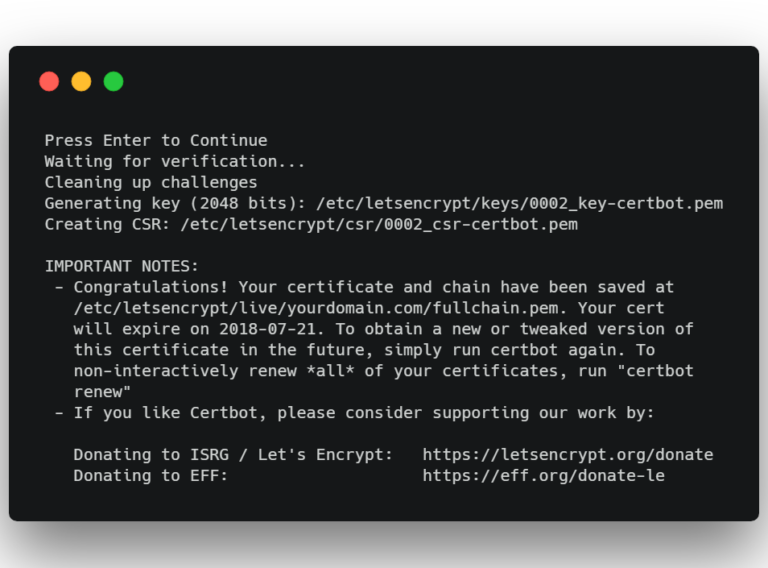
Welcome to our latest article where we will delve into the world of Certbot test certificates. If you’re looking to test your certificates before going live with your website, this information will guide you through the process and ensure your online presence is secure and error-free. Let’s explore the ins and outs of Certbot test certificates and how they can benefit your digital endeavors.
Ensuring Your Letsencrypt Certificate is Valid: A Practical Guide
When it comes to certbot test certificate to ensure your Let’s Encrypt certificate is valid, it’s crucial to follow a few essential steps. Let’s dive into a practical guide to help you through this process smoothly.
First and foremost, after obtaining your certbot test certificate, you need to verify its validity to guarantee that it functions correctly and won’t cause any issues down the line. Here’s how you can ensure your Let’s Encrypt certificate is valid:
- Test Renewal Process: Regularly test the renewal process of your certificate to avoid any last-minute complications.
- Check Expiry Date: Keep a close eye on the expiry date of your certificate to prevent any disruptions in service.
- Verify Certificate Chain: Ensure that the certificate chain is intact and properly linked to avoid any security vulnerabilities.
Additionally, using the certbot test certificate feature can help you simulate the renewal process without affecting your live environment. This allows you to iron out any issues beforehand and ensure a seamless renewal when the time comes.
Remember, staying proactive and regularly monitoring the status of your Let’s Encrypt certificate is key to maintaining a secure and reliable system. By following these steps and utilizing the certbot test certificate functionality, you can ensure that your certificate remains valid and up-to-date.
Locating Certbot Configuration File: A Practical Guide
When dealing with certbot test certificate, it’s essential to know where to locate the Certbot configuration file for a smooth process. Here’s a practical guide to help you find what you need:
To locate the Certbot configuration file, follow these steps:
- First, access your server via SSH or any other preferred method.
- Once logged in, navigate to the Certbot directory. Typically, this can be found at
/etc/letsencrypt. - Within the Certbot directory, look for the configuration file named
cli.iniorrenewal.conf. - Use a text editor like
viornanoto open and view the contents of the file. - Make any necessary modifications to the configuration file as needed for your certbot test certificate setup.
By following these steps, you will easily locate and access the Certbot configuration file for managing your certbot test certificate effectively.
Understanding Letsencrypt: Demystifying Staging Limits
When it comes to obtaining certificates for your website, certbot test certificate through Let’s Encrypt is a popular choice. However, it’s crucial to understand the concept of staging limits to ensure a smooth process. Let’s delve into this topic to demystify any confusion.
Firstly, when using certbot test certificate in staging environments, Let’s Encrypt imposes certain limits to prevent abuse and ensure fair usage. These limits differ from those in production environments and are in place to protect the Let’s Encrypt infrastructure.
One key limit to be aware of is the rate limit on duplicate certificates. In the staging environment, you may encounter this limit if you repeatedly request the same certificate, leading to potential errors. It’s important to keep track of your certificate requests to avoid hitting this limit.
Additionally, another limit to consider is the number of new orders per account per 3 hours. This restriction aims to prevent excessive strain on Let’s Encrypt servers. If you reach this limit, you won’t be able to place new orders for certificates within the specified timeframe.
To navigate these staging limits effectively when working with certbot test certificate, here are some practical tips:
- Keep a record of your certificate requests to avoid duplicates.
- Plan your certificate issuance strategically to stay within the specified limits.
- Monitor your usage periodically to ensure compliance with Let’s Encrypt guidelines.
By understanding and respecting the staging limits set by Let’s Encrypt when using certbot test certificate, you can streamline the certificate issuance process and maintain a secure online presence without encountering unnecessary hurdles.
Mastering SSL Certificates: A Step-by-Step Guide with Certbot
When it comes to Certbot test certificates, it’s essential to follow a step-by-step approach to ensure a smooth process. Certbot is a widely used tool for managing SSL certificates, making it crucial for website security and encryption. Mastering SSL certificates with Certbot can be a game-changer for your online presence. Here’s a practical guide on how to navigate the process effectively:
1. Install Certbot: Begin by installing Certbot on your server. You can refer to the official Certbot documentation for detailed instructions based on your server’s operating system.
2. Request a Test Certificate: To request a test certificate, use the following command:
certbot certonly --test-cert
This will generate a test certificate without affecting your live site.
3. Verify Configuration: After obtaining the test certificate, verify your configuration to ensure everything is set up correctly. Use:
certbot certificates
to view the list of certificates and their status.
4. Test Certificate Renewal: It’s crucial to test the certificate renewal process to avoid any disruptions in the future. You can simulate a renewal with:
certbot renew --dry-run
This will test the renewal process without actually renewing the certificate.
5. Monitor Expiry Dates: Stay proactive by monitoring the expiry dates of your certificates. Set up alerts to remind you in advance so that you can renew them on time.
By mastering SSL certificates with Certbot and understanding how to handle Certbot test certificates efficiently, you can enhance your website’s security posture and build trust with your visitors. Remember to stay informed about the latest updates and best practices to keep your SSL certificates up to date.
As a final tip on the topic of Certbot test certificates, remember to always double-check the configuration settings before running the test to ensure a smooth process. Mistakes in configuration can lead to errors during the testing phase, so it’s crucial to verify all details beforehand.
Thank you for reading our blog and staying informed about legal, regulatory, and practical aspects related to certificates, contracts, declarations, licenses, renewals, and tax issues. Your engagement and interest in these topics are highly appreciated!
Remember, this blog is for informational purposes only. For specific issues or concerns regarding Certbot test certificates, always consult with a professional in the field to receive tailored advice and guidance.
We encourage you to share your thoughts in the comments section below, share this article on social media to help others, or explore our other related articles for more valuable insights. Stay informed, stay proactive!
If you found this article informative and engaging, be sure to visit our IT Certifications section for more insightful articles like this one. Whether you’re a seasoned enthusiast or just beginning to delve into the topic, there’s always something new to discover in auslegalhub.com. See you there!

