
Are you considering withdrawing funds from your superannuation before the age of 60? It’s essential to understand the tax implications that come with this decision. In this article, we will explore the rules and regulations surrounding taxes on super withdrawals before the age of 60, providing you with the information you need to make informed financial decisions. Read on to ensure you are well-prepared for this aspect of your financial planning journey.
Withdrawing Super Early: Understanding Tax Implications
Withdrawing your superannuation before the age of 60 can have significant tax implications that you need to be aware of. It’s important to understand how the taxation system treats these early withdrawals to avoid any surprises down the road.
When you withdraw your super early, the taxable component of the payment is generally taxed at your marginal tax rate. This means that the amount you withdraw will be added to your assessable income for the year, potentially pushing you into a higher tax bracket.
It’s also crucial to note that the tax treatment of super withdrawals can vary depending on your age, the components of your super balance, and whether you are receiving any other income. Below is a simple table outlining the tax implications of super withdrawals before the age of 60:
| Age | Tax on Taxable Component |
|---|---|
| Under preservation age | Taxed at your marginal tax rate with no tax offset |
| Preservation age to 59 | Taxed at your marginal tax rate with a 15% tax offset |
To minimize the tax impact of withdrawing your super early, consider the following strategies:
- Plan your withdrawals strategically to spread them over multiple years to stay within lower tax brackets.
- Explore options like transitioning to retirement strategies to supplement your income without triggering higher taxes.
- Consult with a financial advisor or tax professional to understand the best approach based on your individual circumstances.
By being proactive and informed about the tax implications of withdrawing your super early, you can make sound financial decisions that align with your long-term goals.
Understanding Tax Implications on Super Lump Sums Pre-60
When it comes to withdrawing funds from your superannuation account before the age of 60, it’s essential to understand the tax implications involved. Super lump sum withdrawals made before reaching the preservation age are subject to specific taxation rules set by the Australian Taxation Office (ATO).
One key consideration is that the tax treatment of these withdrawals depends on various factors, such as your age, the components of your super balance, and any applicable tax offsets or deductions. Here are some important points to keep in mind:
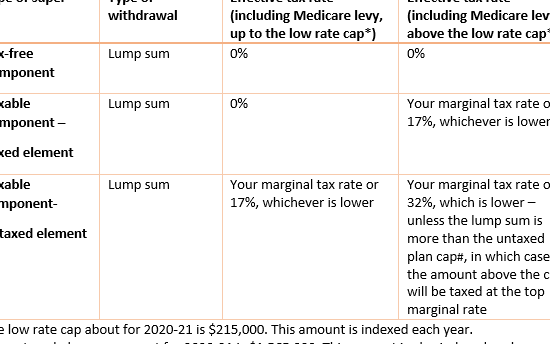
- Taxable Component: The taxable component of your super lump sum withdrawal will be subject to tax at your marginal tax rate. This component typically includes any contributions made from pre-tax income, such as employer contributions and salary sacrifice amounts.
- Tax-Free Component: The tax-free component, which usually consists of post-tax contributions and certain government co-contributions, is not subject to tax when withdrawn.
- Low Rate Cap: Individuals aged 55 or older may be eligible for a low rate cap that allows them to withdraw a portion of their super lump sum tax-free up to a certain limit.
It’s crucial to consider the implications of withdrawing super funds early, as doing so may impact your retirement savings and overall financial plan. Seeking advice from a qualified financial advisor or tax professional can help you navigate the complexities of tax on super withdrawals before 60 and make informed decisions based on your individual circumstances.
Tax-Free Super Withdrawals: Age Requirements Decoded
When it comes to tax on super withdrawals before 60, understanding the age requirements for tax-free super withdrawals is crucial. Here’s a breakdown of the key points you need to know:
1. Preservation Age: This is the age at which you can access your super if you have retired. The preservation age varies depending on your date of birth, ranging from 55 to 60 years old.
2. Tax Implications: Withdrawing your super before the age of 60 may have tax consequences. Generally, any withdrawals made before reaching the age of 60 are taxable, except for specific circumstances.
3. Tax-Free Component: A portion of your super withdrawal may be tax-free, known as the tax-free component. This component consists of contributions that have already been taxed or certain types of withdrawals that are exempt from tax.
4. Conditions for Tax-Free Withdrawals: To access tax-free super withdrawals before the age of 60, you may need to meet certain conditions, such as retiring due to permanent incapacity or reaching the preservation age and starting a transition to retirement income stream.
5. Seek Professional Advice: Taxation laws surrounding super withdrawals can be complex, and it’s advisable to seek advice from a financial advisor or tax professional to ensure you understand the tax implications and requirements applicable to your situation.
By being aware of the age requirements and tax implications associated with tax on super withdrawals before 60, you can make informed decisions regarding your super and plan accordingly for your retirement.
Understanding Super Withdrawal: Your Tax-Free Allowance Explained
When it comes to tax on super withdrawals before 60, understanding your tax-free allowance is crucial for maximizing your savings. Here’s a breakdown to help you navigate this aspect of super withdrawals:
What is the tax-free component of super withdrawals before 60?
Before the age of 60, any super withdrawals consist of two components: taxable and tax-free. The tax-free component is made up of your personal contributions that have already been taxed, as well as any withdrawals from a taxed source such as a tax-free pension.
How is the tax-free amount calculated?
The tax-free amount is calculated based on the proportion of your total super balance that is made up of tax-free components. This proportion determines the tax-free percentage of your withdrawals.
What are the tax implications of exceeding the tax-free allowance?
If you exceed your tax-free allowance, the excess amount will be taxed at your marginal tax rate. Therefore, it’s essential to stay within your tax-free limit to avoid unnecessary tax implications.
Strategies to optimize your tax-free super withdrawals
- Consider withdrawing from tax-free sources first to maximize your tax-free allowance.
- Consult with a financial advisor to explore tax-effective strategies for super withdrawals.
- Regularly review your super balance and tax-free components to plan your withdrawals effectively.
By understanding your tax-free allowance for super withdrawals before 60 and implementing strategic approaches, you can make the most of your savings while minimizing tax implications.
One final tip regarding tax on super withdrawals before the age of 60 is to consider the tax implications carefully before making any decisions. By being informed about the tax rules and seeking professional advice, you can ensure that you are making the best choices for your financial future.
Remember, the information provided in this blog is for educational purposes only. Always consult with a professional tax advisor or financial planner to get personalized advice tailored to your specific situation.
Thank you for reading our blog! We hope you found this information valuable. If you have any questions, tips, or experiences to share regarding tax on super withdrawals, feel free to leave a comment below. Don’t forget to share this article with your friends and family on social media and check out our other related articles for more useful insights.
Stay informed, stay proactive, and make the most of your financial decisions! See you next time.
If you found this article informative and engaging, be sure to visit our Income Tax section for more insightful articles like this one. Whether you’re a seasoned enthusiast or just beginning to delve into the topic, there’s always something new to discover in auslegalhub.com. See you there!

